
Have you ever sat down to do something you’ve been putting off, only to discover that now would be an excellent time to tidy the desk?
The desk might genuinely need tidying. But the job you sat down to do is still waiting, and you’ve somehow managed to give yourself a second job.
When that happens, I find it helps to ask a smaller question. What could I do with the next 25 minutes?
What is the Pomodoro Method?
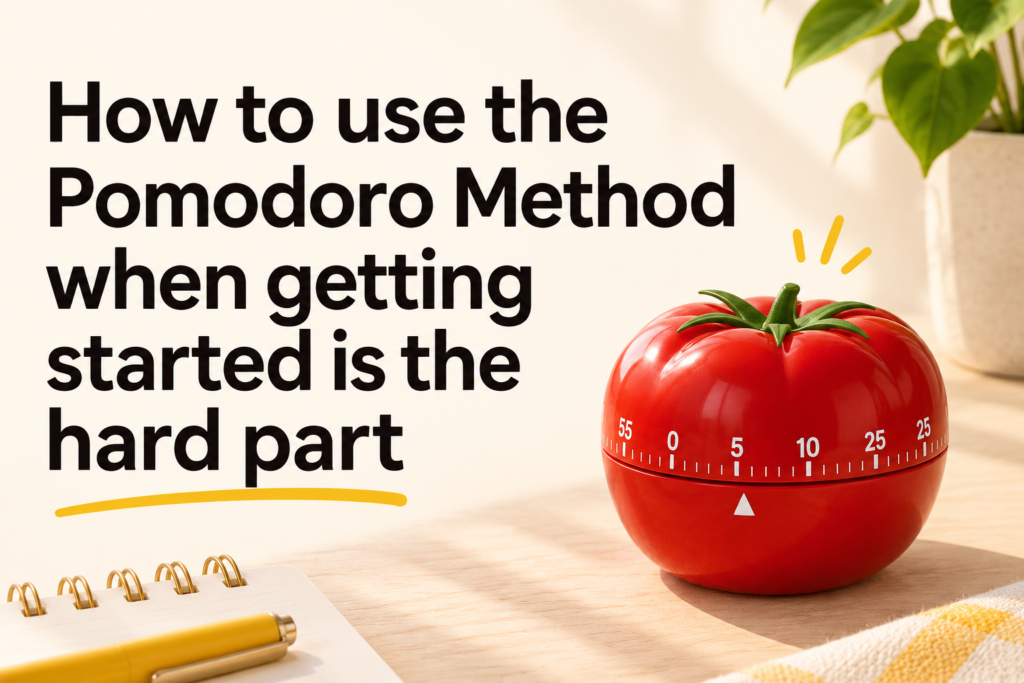
Francesco Cirillo developed the Pomodoro Technique when he was a university student. He used a tomato-shaped kitchen timer, which explains the name. Pomodoro is Italian for tomato. An ordinary kitchen timer or the one on your phone will do nicely. Read Cirillo’s story.
The basic rhythm is to work on one task for 25 minutes, then take a short break of about five minutes. If you do four rounds, take a longer break of 15 to 30 minutes. There’s more to Cirillo’s method, including how he handles interruptions and estimates how long a task will take. One round is enough to give the timer a go. See Cirillo’s original guide.
How I used it in my 52-Day Challenge
For my 52-Day Challenge, I chose to spend a little time each day on my profiling studies. On the first day, I sat down to work on a practice profile and ended up doing three Pomodoro sessions.
What I like about using a timer for study is that “work on my course” can mean almost anything. “Spend this session reviewing my notes for one section of the profile” gives me somewhere to begin. At the end of a session, I can see what I’ve covered and decide where to pick up next time.
Try one round today
- Choose one thing to work on. “Sort out my photos” could take all weekend. “Go through the photos from one trip and pick five favourites” gives you a place to start.
- Set a timer for 25 minutes and begin. If 25 minutes feels like a stretch today, try a 10-minute version. If you suddenly remember you need to book the car in for a service, jot it down and come back to what you were doing.
- When the timer rings, note where to pick up. A few words will do. “Next time, start with the photos from Tuesday” is enough to save yourself some rummaging.
- Take five minutes away from the task. Stretch, make a cuppa or step outside. Then decide whether to do another round or leave it there for today.
Think of one thing you’ve been meaning to get to. What’s a small piece of it you could give your attention to today?
Set the timer and see how far you get.

Megan Ruffino is a professional life coach, Master NLP Practitioner and trainer who writes about happiness, self-coaching and personal growth. She helps people understand themselves more clearly, make conscious choices and take practical steps toward lives that feel happier and more empowered.