
Self-awareness is one of those ideas that sounds simple until you actually try to practise it.
Most of us like to think we know ourselves reasonably well. We know what we value, what frustrates us, what we are good at, what we avoid, and what we want more of in life. But the truth is, none of us sees ourselves completely clearly all the time.
That is where the Johari Window can be useful.
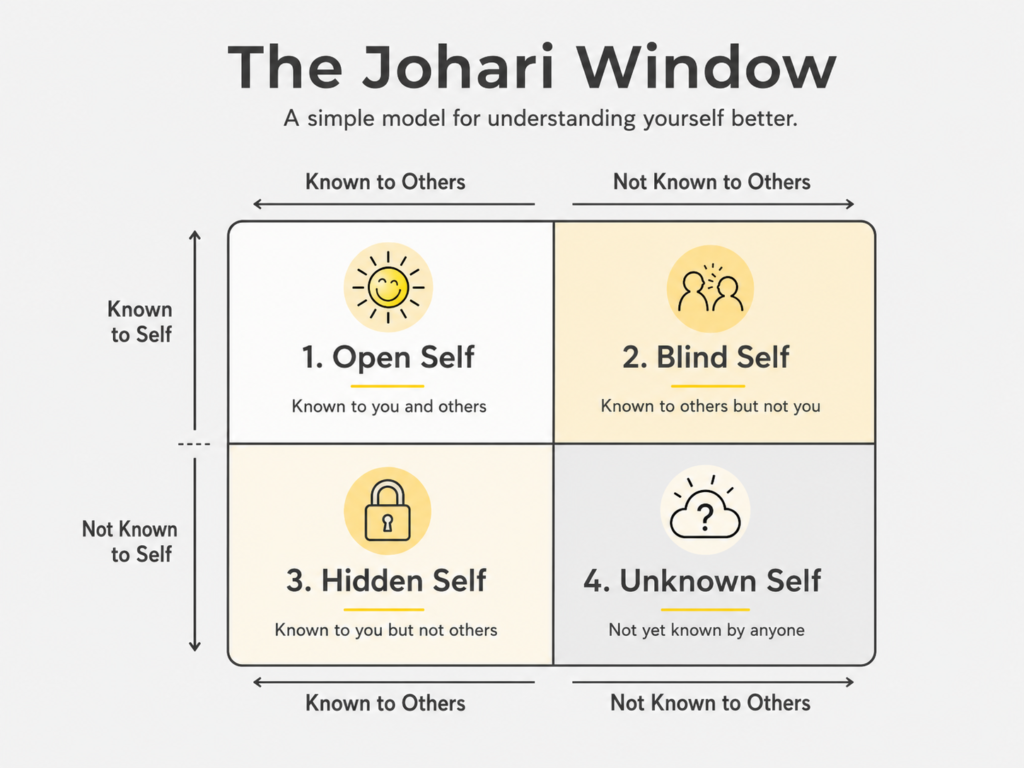
The Johari Window is a simple self-awareness model that helps us understand the different parts of ourselves: what we know, what we show, what others notice, and what is still waiting to be discovered.
Like many life coaching models, the Johari Window gives us a simple structure for asking better questions rather than rushing straight to advice or action.
It was originally developed as a tool for communication and personal growth, but you do not need to use it in a formal or corporate way. At its best, it is a practical reminder that self-awareness is not only about looking inward. Sometimes we understand ourselves better through feedback, relationships, reflection, and new experiences.
In simple terms, the Johari Window has four areas: the open self, the blind self, the hidden self, and the unknown self.
The Open Self
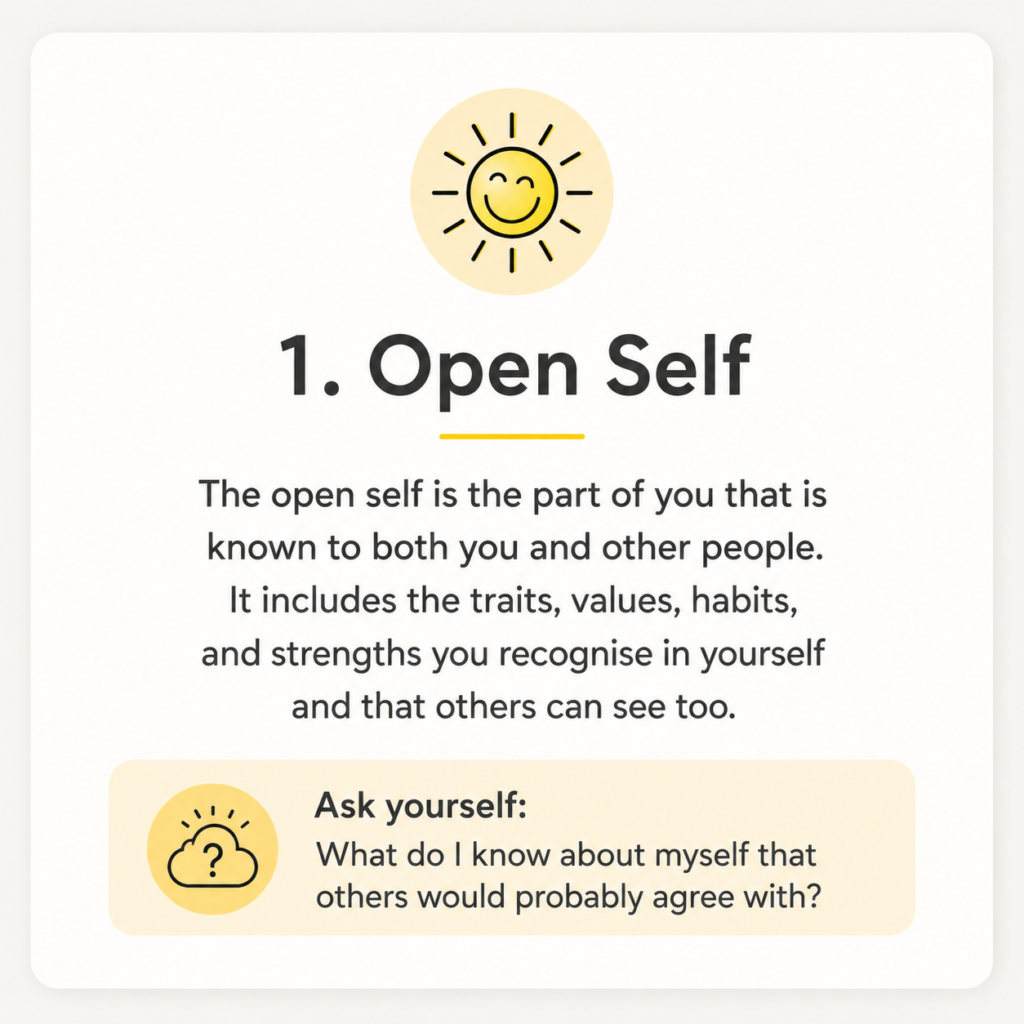
The open self is the part of you that is known both to you and to other people.
This might include your personality, values, strengths, habits, communication style, skills, preferences, or the way you usually show up in the world. For example, you may know that you are reliable, and other people may experience you as reliable too. You may know that you are direct, thoughtful, creative, organised, sensitive, funny, practical, or determined, and others may see those qualities in you as well.
If you want to understand this part of yourself more clearly, the Values Clarification model is a useful next step because it helps you identify what genuinely matters to you, not just what you have been taught to prioritise.
The open self is important because it helps create trust. When you understand yourself and communicate honestly, other people do not have to guess who you are, what matters to you, or what you need.
Personal growth often expands the open self. The more honest and self-aware we become, the less energy we spend pretending, hiding, or defending. We become clearer with ourselves, and often clearer with others too.
A useful question to ask is: What do I know about myself that others would probably agree with?
The Blind Self
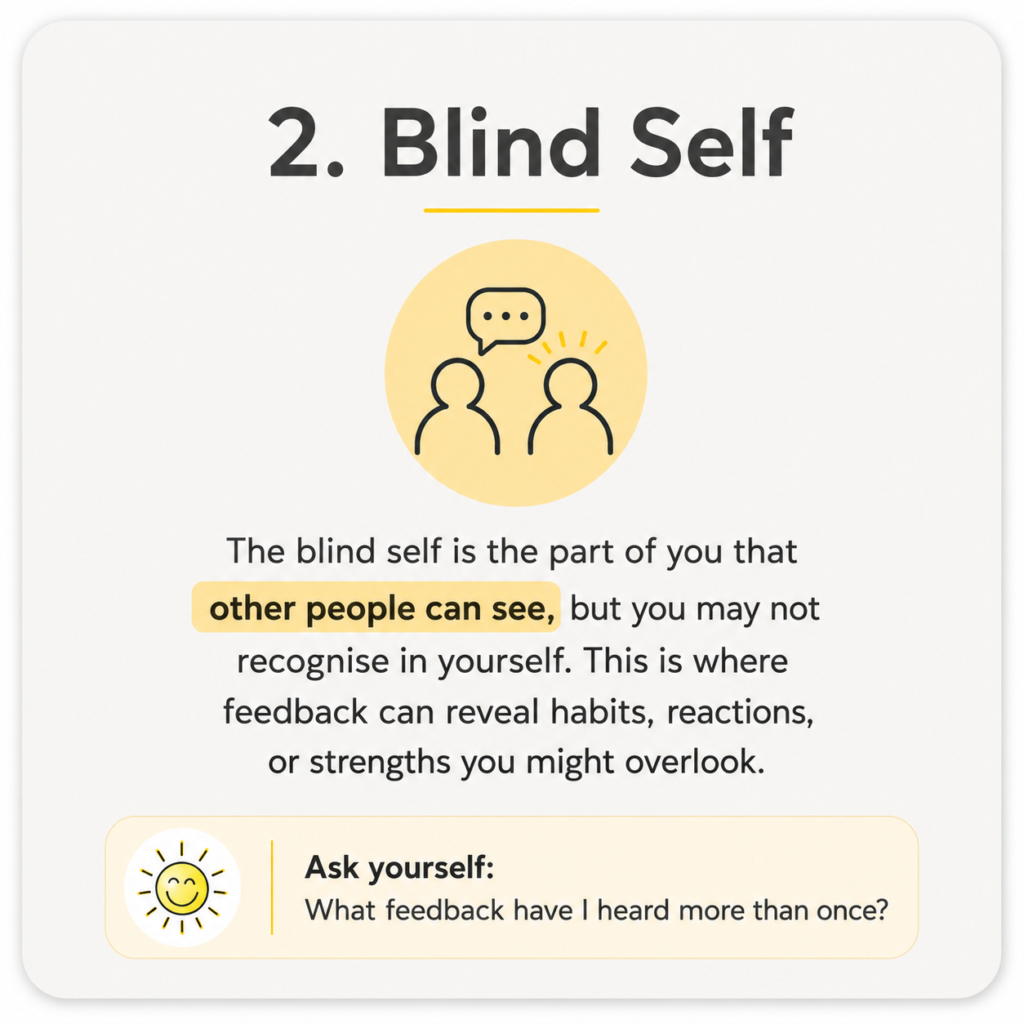
The blind self is the part of you that other people can see, but you may not easily see in yourself.
This is where feedback can be valuable, although not always comfortable. Other people may notice patterns in your behaviour, communication, or emotional reactions that you do not recognise straight away.
This connects well with the Iceberg Model, which looks at the deeper thoughts, beliefs, emotions, and needs that often sit underneath the behaviour people see on the surface.
For example, you may not realise that you interrupt when you are excited, withdraw when you feel criticised, over-explain when you feel uncertain, avoid asking for help, or minimise your own needs.
The Think Feel Act model can be helpful here because it gives you a simple way to explore the thoughts and feelings that may be driving the behaviours other people notice before you do.
You may also have positive blind spots. Other people may see strengths in you that you dismiss or underestimate.
This does not mean every opinion about you is accurate. Some feedback tells you more about the other person than it tells you about yourself. That is why it is important to listen for patterns, not every passing opinion.
If one person says something that does not fit, you can consider it without swallowing it whole. But if several people, in different contexts, reflect something similar back to you, it may be worth paying attention.
Feedback is not always criticism. Sometimes it is a mirror.
A useful question to ask is: What feedback have I heard more than once?
The Hidden Self
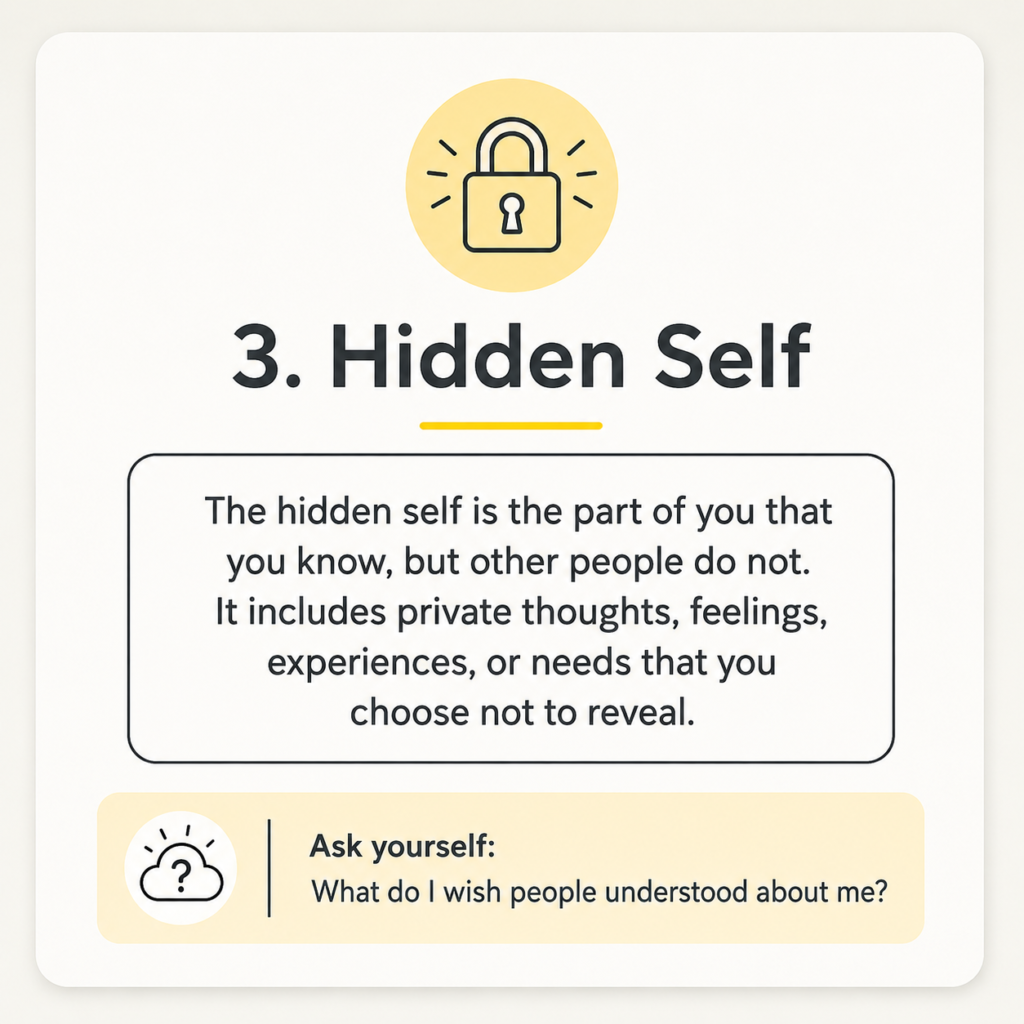
The hidden self is the part of you that you know, but other people do not.
This may include your private thoughts, fears, hopes, dreams, insecurities, past experiences, needs, or parts of your personality that you do not easily show. Some of this hidden self is completely healthy. Privacy matters. Not everything needs to be shared with everyone.
The issue is not that we have private parts of ourselves. The issue is when hiding becomes our default way of staying safe.
When the hidden self becomes too large, it can create loneliness, resentment, miscommunication, or distance in relationships. People may care about us, but not really know what is happening inside us. We may wish others understood us better, while also giving them very little access to the truth.
Healthy self-disclosure is not about exposing everything. It is about choosing safe, appropriate places to be more honest. It might mean saying, “I am finding this harder than I expected,” or “I need some time to think,” or “This matters to me more than I have admitted.”
If this reflection shows you something you want to change, the GROW model can help you turn that insight into a clear goal, realistic options, and a next step.
A useful question to ask is: What do I wish people understood about me?
The Unknown Self
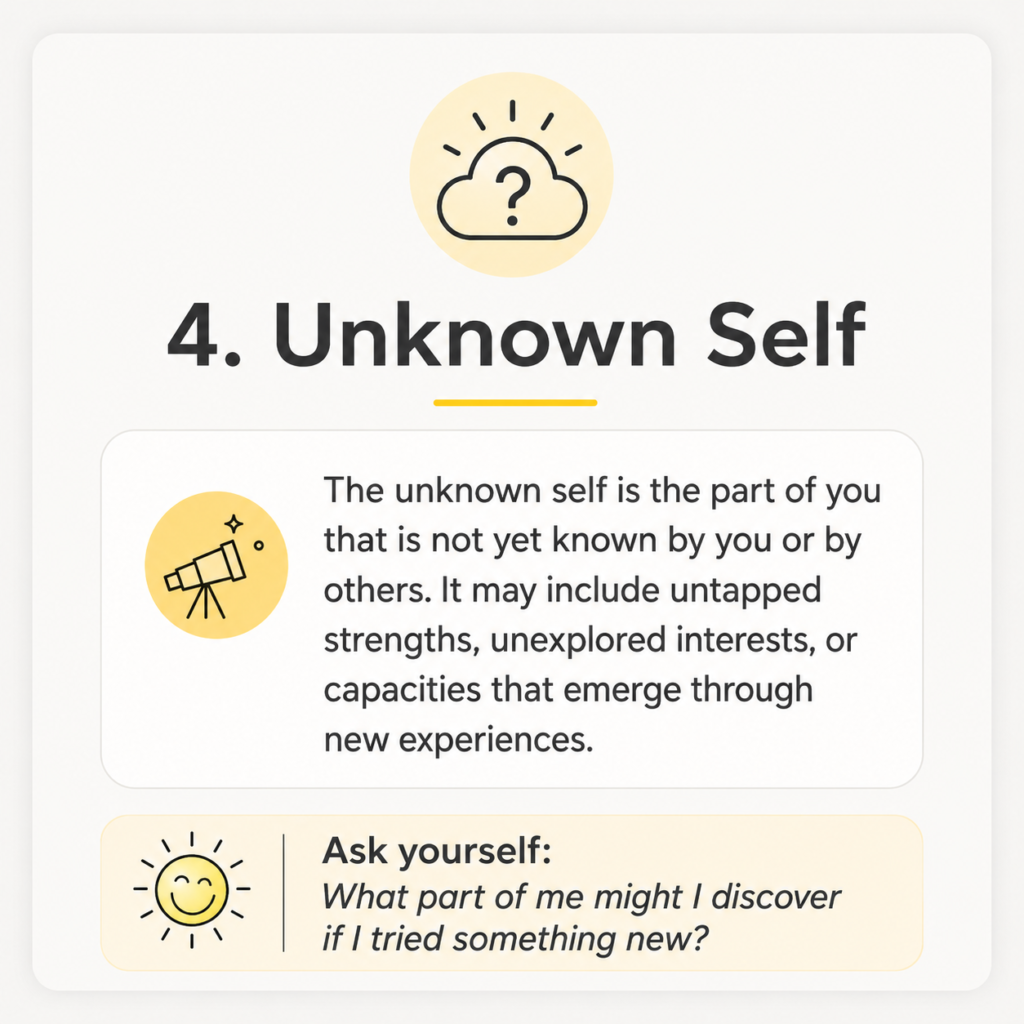
The unknown self is the part of you that is not yet fully known by you or by others.
This might include strengths you have not had to use yet, interests you have not explored, capacities that only appear under pressure, or dreams that have not had enough space to form clearly. It may also include old patterns, grief, resilience, creativity, courage, or possibilities that life has not brought to the surface yet.
The unknown self is not a problem. It is possibility.
There are parts of you that life has not introduced you to yet. This is one reason new experiences matter.
The WOOP Method can be especially useful when you want to explore a new possibility, because it helps you name your wish, imagine the outcome, identify the obstacle, and make a practical plan.
When we try something different, enter a new season, face a challenge, learn a skill, travel, create, reflect, or ask better questions, we often discover parts of ourselves we did not know were there.
We are not fixed, finished products. We are still unfolding.
A useful question to ask is: What new part of myself might I discover if I tried something different?
How the Johari Window Helps Personal Growth
The Johari Window gives us a simple way to think about self-awareness.
The open self reminds us to live with honesty and clarity.
The blind self reminds us to stay open to feedback without handing our identity over to every opinion.
The hidden self reminds us that privacy is healthy, but isolation can be costly.
The unknown self reminds us that we are still capable of growth, discovery, and change.
The aim is not to make every part of yourself visible to everyone. That would not be wisdom; it would be emotional overexposure. The aim is to know yourself more clearly, share yourself more wisely, and stay open to learning who you are becoming.
Self-awareness is not about finding a fixed identity and locking it in place. It is about becoming more willing to see yourself clearly, kindly, and completely.
A Simple Reflection Exercise
If you prefer to reflect across different areas of life first, the Wheel of Life can help you notice where you feel satisfied, stretched, neglected, or ready for change.
Take a few minutes to reflect on the four areas of the Johari Window.
For the open self, ask: What do I know about myself that others would probably agree with?
For the blind self, ask: What feedback have I heard more than once?
For the hidden self, ask: What do I wish people understood about me?
For the unknown self, ask: What might I discover about myself if I tried something new, asked for support, or allowed myself to grow in a different direction?
You do not need to answer these questions perfectly. Just answer them honestly.
Self-awareness grows one honest observation at a time.
Final Thought
You cannot grow what you cannot see.
The Johari Window is useful because it reminds us that self-understanding does not happen in isolation. We learn about ourselves through reflection, feedback, relationships, courage, and lived experience.
Some parts of you are already visible. Some parts may need a clearer mirror. Some parts may need a safer place to be expressed. And some parts are still waiting to be discovered.
That is not a flaw in you. That is the work of being human.
This is one of several practical tools you can use to coach yourself through change. Visit my complete guide to self-coaching to explore the process and find the model that best suits what you are working through.
Want to keep practising this kind of self-reflection?
Reading about a model like the Johari Window is a useful start, but the real growth happens when you begin applying these ideas to your own life.
I’m creating a self-coaching membership for people who want to understand themselves more clearly, make wiser decisions, and build a more intentional life one practical step at a time.
If the idea of learning how to coach yourself with practical tools and support appeals to you, add your name to the Self-Coaching Studio interest list and I’ll keep you updated as it develops.
Related reading
If you found the Johari Window helpful, you may also like these simple life coaching models:
- The Iceberg Model — for understanding what sits beneath visible behaviour.
- Values Clarification — for getting clearer about what matters most to you.
- The GROW Model — for turning insight into action.
- The WOOP Method — for making a realistic plan when you want to change something.
- The Wheel of Life — for reflecting on the different areas of your life.
- Think Feel Act — for understanding how your thoughts, feelings, and actions influence each other, especially when you want to change an unhelpful pattern.

Megan Ruffino is a professional life coach, Master NLP Practitioner and trainer who writes about happiness, self-coaching and personal growth. She helps people understand themselves more clearly, make conscious choices and take practical steps toward lives that feel happier and more empowered.