Loving someone with an addiction is one of the hardest experiences you can go through. It twists your heart into knots and leaves you questioning yourself at every turn. You wonder, Is it my fault? Should I have done something differently? If I love them enough, will they finally change?
I know those questions because I’ve asked them too.
The truth is—addiction is powerful. It changes how your loved one thinks, behaves, and relates to the people around them. And even though it might feel deeply personal, it isn’t about you. Their choices, their struggles, and their recovery (if they choose it) are ultimately theirs.
The emotional rollercoaster of loving someone with an addiction
When someone you love has an addiction, you often feel like you’re living on high alert. One moment there’s hope—maybe they’ve promised to stop or made it through a day sober. The next, the bottom falls out and you’re back in the chaos of lies, broken trust, or destructive behaviour.
It’s exhausting. And it’s lonely, too—because unless you’ve been there, it’s hard for others to understand why you can’t just “walk away” or “let them hit rock bottom.”
The invisible weight you carry
Many women who love someone with an addiction start carrying the load for two. You might pick up responsibilities they’ve dropped, make excuses for them, or even change your own behaviour to try to keep the peace. Without even noticing, you can lose touch with your own needs, your boundaries, and even your sense of self.
That’s why it’s so important to pause and remember: your life matters just as much as theirs.
Addiction affects the whole family
Addiction rarely affects just one person. Research consistently shows that when someone struggles with substance use, the impact ripples outward to partners, children, parents, and close friends. Family members often experience chronic stress, anxiety, disrupted routines, and a constant state of emotional vigilance as they try to anticipate problems or prevent harm. Over time, this can lead to burnout, resentment, and a loss of personal wellbeing—even when the person with the addiction is the one receiving treatment or attention. Understanding that addiction affects the whole family helps explain why loving someone with an addiction can feel so consuming, and why support for you is not selfish, but necessary.
Addiction doesn’t exist in isolation, and neither does its impact. Australian health authorities recognise that alcohol and drug dependence can significantly affect partners, children, and other family members — emotionally, psychologically, and practically. Ongoing stress, instability, and role overload are common experiences for families living alongside addiction, which is why support is recommended not only for the person using substances, but for those who love them too. You can read more about this from the Australian Government’s health resources on how addiction affects families and loved ones.
For a broader perspective, this overview on how addiction affects the whole family outlines the common emotional patterns, relationship strain, and long-term impacts often experienced by partners and family members.
You can’t control their addiction—but you can take back your life
Here’s the hard reality—no matter how much you love someone, you can’t force them to change. Addiction has its own rules, and it doesn’t play fair.
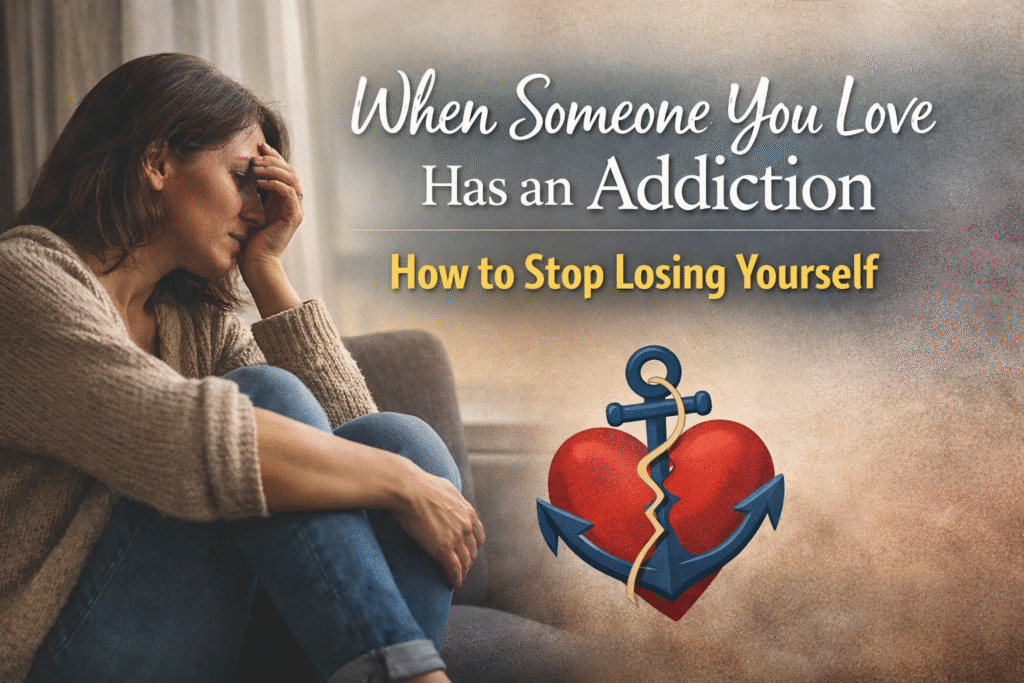
But here’s the hope—you can decide how you show up for yourself. You can create boundaries, find support, and start living in a way that isn’t defined by their addiction. It doesn’t mean you stop loving them. It means you stop losing yourself.
Finding your anchor
If you’re reading this and nodding along, know that you’re not alone. There are thousands of women—just like you—who are quietly navigating the storm of loving someone with an addiction.
And while every story is unique, the path forward often starts in the same place: choosing to care for yourself. Not as an afterthought, not when things finally settle down, but now.
Because when you’re anchored, you can weather even the roughest seas.
Final thought
in the process. You get to choose your own path, your own healing, and your own happiness—even when they can’t choose theirs.
And if you’d like support in doing that, I created the Anchored & Rising Circle—a coaching program and community for women who love someone with an addiction. It’s a safe harbour where you’ll learn tools to set boundaries, reclaim your sense of self, and rise again.
👉 Join the waitlist here to be the first to know when doors open with support for women who love someone with an addiction

Megan Ruffino is a professional life coach, Master NLP Practitioner and trainer who writes about happiness, self-coaching and personal growth. She helps people understand themselves more clearly, make conscious choices and take practical steps toward lives that feel happier and more empowered.