Spending time in nature can be one of the simplest ways to support your mood and wellbeing. Research on green spaces, blue spaces and natural environments has linked time outdoors with lower stress, improved mood and greater overall wellbeing. There’s even a name for our tendency to seek connection with nature and other living things: biophilia.
Here in Southern Australia, as we inch into spring (despite the late winter chill), I can feel that pull more strongly than ever. Blossoms are blooming on the trees and the yellow soursob (Oxalis) flowers are just everywhere. The ground here is looking lush and green and the change of season is beckoning me outside and into nature. Being outside instantly lifts my spirits.
Research increasingly supports what many of us notice for ourselves: time in nature can help us feel calmer, more restored and more connected to the world around us.

Biophilia: Why We’re Wired for Nature
Biophilia literally means, love of life and it was first introduced as a concept by Erich Fromm, a psychoanalyst who described it as “the passionate love of life and of all that is alive.” The idea and phrase were expanded upon by a biologist, E.O. Wilson, who described it as, “our genetic pull to focus on life and lifelike processes.”
The theory of biophilia says that our love of nature isn’t just sentimentality, but part of our biological make-up shaped by our evolution in natural environments. In recent years, as more of us live in urban settings we are re-discovering the benefits of being in nature.
The Science of Green and Blue Spaces
Green and blue spaces simply refer to natural environments that feature vegetation (green) or water (blue). Green spaces include things like parks, gardens, forests, or even tree-lined streets. Blue spaces are rivers, lakes, beaches, and oceans. Both types of spaces have been shown to lower stress, improve mood, and boost overall wellbeing.
Spending time in green and blue spaces has become a hot topic in mental health research.
In 2022 researchers, Weijie Zhong and Juliette Bekkering, published the results of their study, Biophilic design in architecture and its contributions to health, well-being, and sustainability – read more about this and other recent studies on the topic here.
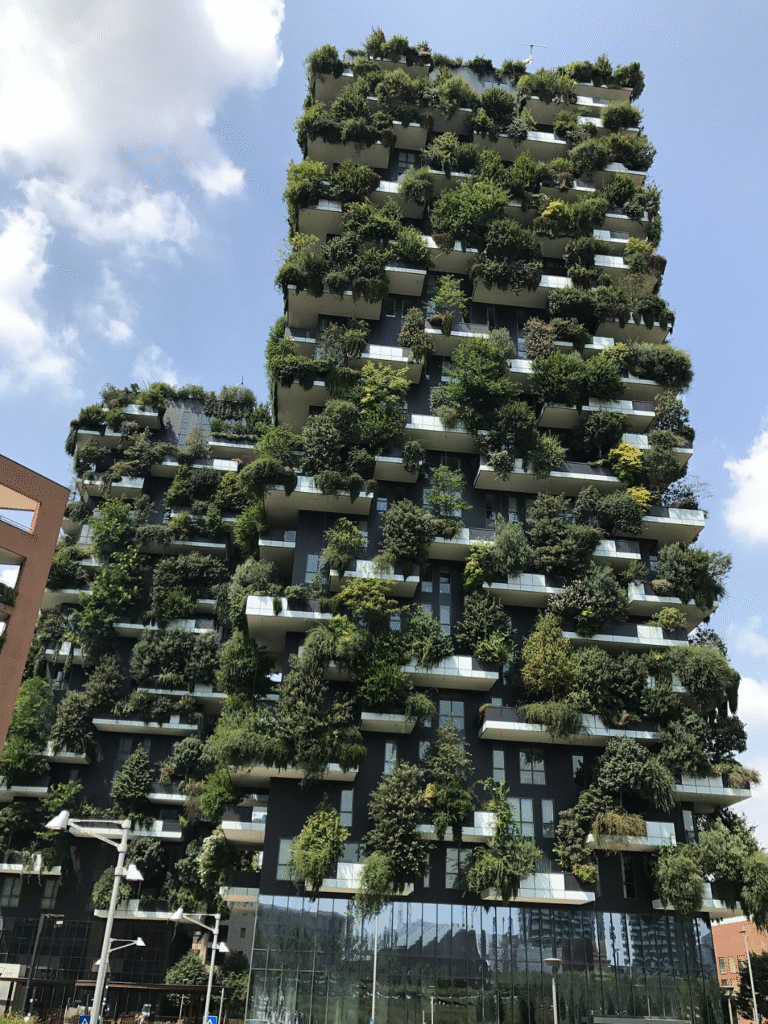
Examples of where these principles are being used in architecture can be seen in the Bosco Verticale (Milan, Italy): A vertical forest for residential living. And, Jewel Changi Airport in Singapore where you can experience an indoor forest and waterfalls while waiting for your next flight.
How 20 Minutes Outside Can Help Reduce Stress
You do not need to disappear into the wilderness for hours to benefit from spending time in nature.
One 2019 study published in Frontiers in Psychology found that spending around 20 minutes in a natural setting was associated with a measurable reduction in cortisol, a hormone involved in the stress response.
What is especially encouraging is that participants did not need to travel somewhere remote or spectacular. Backyards, public parks and other accessible green spaces were enough. Simply spending time in those environments — sitting, walking or doing another low-key activity — was associated with reduced stress.
That makes nature one of the more accessible wellbeing tools available to us. A short walk through a local park, sitting outside with a cup of tea, or spending a little time in the garden may be enough to give your mind and body a useful change of pace.
Forest Bathing and Mindful Nature Practices
Of course, we can also be more intentional about the way we spend time outdoors.
You may have heard of forest bathing, or shinrin-yoku. The practice originated in Japan and involves slowing down in a forest or other natural environment and deliberately engaging your senses — noticing what you can see, hear, smell and feel.
It is not about hiking, exercise or reaching a destination. The point is simply to be present and pay attention to the natural world around you.
Research into forest bathing has linked the practice with reductions in measures such as blood pressure, heart rate and cortisol. Some studies have also explored possible effects on immune function, although this area of research is still developing.
Even without a forest nearby, the underlying idea is useful: slow down, notice what is around you, and give your attention somewhere other than the thoughts and stresses that have been occupying it.
Simple Daily Doses of Nature for Wellbeing
And that may be the best news of all: you do not need perfect scenery or a special trip to get some of the benefits.
Sit under a tree. Walk through a local park. Spend time near the beach, a river or a lake. Wander around your garden. Even finding a bench somewhere green and simply watching what is happening around you can give you a reason to stop, look up and reconnect with the world outside your own head.
Nature does not have to be another thing you organise or achieve.
Sometimes, you just need to go outside.
What is your favourite way to spend time in nature? Tell me in the comments below.
This post is part of my Slow Living & Presence series.
👉 Read the main guide: The Joy of Slow Living in a Fast World
Explore more in the series:
- Presence
- How to Start a Gratitude Practice
- Nature: The Original Antidepressant
- The Science of Happiness
- Happiness Is Not Positive Thinking
If you’d like more science-backed tips on happiness and wellbeing, subscribe to my newsletter for weekly inspiration.

Megan Ruffino is a professional life coach, Master NLP Practitioner and trainer who writes about happiness, self-coaching and personal growth. She helps people understand themselves more clearly, make conscious choices and take practical steps toward lives that feel happier and more empowered.