
happiness is a decision

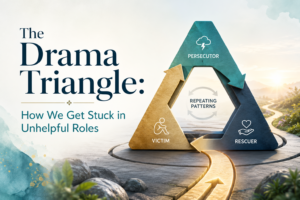
“The Drama Triangle: How We Get Stuck in Unhelpful Roles,” showing a symbolic triangle with the roles Victim, Rescuer, and Persecutor connected in a repeating pattern, with a pathway leading outward to suggest moving toward healthier choices.

The Drama Triangle: How We Get Stuck in Unhelpful Roles

The Drama Triangle helps explain how we can slip into unhelpful roles during conflict, stress, or emotional discomfort. By noticing when we move into Victim, Rescuer, or Persecutor, we can begin shifting toward more empowered responses built on choice, boundaries, honesty, and emotional maturity.

The Drama Triangle: How We Get Stuck in Unhelpful Roles Read More »

Woman journaling in a bright room for a blog post about self-compassion as a coaching tool

Self-Compassion as a Coaching Tool: How to Stop Beating Yourself Up and Start Moving Forward

Self-compassion is not about making excuses or avoiding responsibility. It is a practical coaching tool that helps you notice what you are feeling, normalise the human struggle, and nurture yourself with the next kind and useful step.

Self-Compassion as a Coaching Tool: How to Stop Beating Yourself Up and Start Moving Forward Read More »

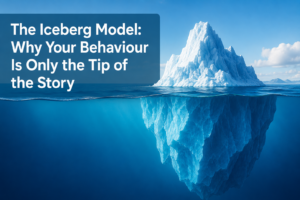
The iceberg coaching model explained visually

The Iceberg Model: Why Your Behaviour Is Only the Tip of the Story

The Iceberg Model is a simple coaching tool that helps you look beneath surface behaviour to the thoughts, beliefs, emotions, fears, values, and identity patterns that may be driving it. This article explains why behaviour is only the tip of the story — and how to use the model for practical self-coaching and lasting change.

The Iceberg Model: Why Your Behaviour Is Only the Tip of the Story Read More »

Calm image representing beginning again gently without pressure after a difficult season

Beginning Again Without Pressure: Gentle Ways to Move Forward When Life Is Heavy

When life has been heavy, the idea of moving forward can feel overwhelming. This article explores how to begin again without pressure—by letting capacity lead, choosing gentle steps, and allowing progress to unfold at a pace that supports stability, trust, and long-term wellbeing.

Beginning Again Without Pressure: Gentle Ways to Move Forward When Life Is Heavy Read More »

Calm image representing anchors and stability during uncertain times rather than goal-driven pressure

Anchors, Not Goals: What Actually Stabilises Us in Uncertain Times

When life feels uncertain, goals can feel heavy rather than helpful. This article explores why anchors—small, steady supports—often stabilise us better during difficult seasons, and how they create the conditions for clarity, motivation, and progress to return naturally, without pressure or force.

Anchors, Not Goals: What Actually Stabilises Us in Uncertain Times Read More »

Person sitting quietly by a window in soft light, reflecting on why motivation disappears when life gets hard

Why Motivation Disappears When Life Gets Hard (And Why That’s Not a Failure)

When life gets hard, motivation often disappears—and that’s not a personal failure. This article explores why stress and emotional upheaval affect motivation, why pushing harder rarely helps, and what supports motivation returning naturally once stability and safety come first.

Why Motivation Disappears When Life Gets Hard (And Why That’s Not a Failure) Read More »

Breaking big goals into small steps

Breaking Big Goals Into Small Steps: The Key to Actually Achieving Them

Big goals are inspiring — but they can also feel overwhelming. This guide shows you how to break big goals into small steps, with science-backed strategies, real-life examples, and common pitfalls to avoid. Learn how small actions create momentum and lead to lasting success.

Breaking Big Goals Into Small Steps: The Key to Actually Achieving Them Read More »

Verified by MonsterInsights